
Introduction to the Beginner’s Guide to P2E Games
The gaming industry has experienced a major transformation with the rise of blockchain technology. One of the most exciting developments is the emergence of Play-to-Earn (P2E) games, where players can earn real-world value through gameplay. This Beginner’s Guide to P2E Games is designed to help newcomers understand the basics, mechanics, benefits, risks, and steps involved in getting started.
Unlike traditional games where rewards remain locked inside the game ecosystem, P2E games allow players to own digital assets such as tokens and non-fungible tokens (NFTs). These assets can often be traded, sold, or transferred outside the game. For beginners, this concept can feel complex, but with the right guidance, anyone can explore P2E gaming with confidence.
This guide takes a structured, easy-to-follow approach, ensuring that even those with no prior experience in blockchain or cryptocurrency can understand and participate safely.
What Are Play-to-Earn (P2E) Games?
Play-to-Earn games are video games built on blockchain technology that reward players with digital assets for completing tasks, winning battles, or progressing through the game. These rewards usually come in the form of cryptocurrencies or NFTs, both of which may hold real monetary value.
In traditional gaming models, players spend money on in-game items that cannot be sold or transferred outside the game. P2E games change this model by allowing players to truly own what they earn. Ownership is recorded on a blockchain, making assets verifiable and tradeable.
Most P2E games operate within decentralized ecosystems, meaning no single company has full control over player assets. This decentralization adds transparency but also requires players to take responsibility for their digital wallets and security.
How P2E Games Work
P2E games combine gameplay mechanics with blockchain-based reward systems. While each game is different, the core structure remains similar.
Blockchain Integration
Blockchain technology serves as the backbone of P2E games. It records transactions, asset ownership, and reward distribution. Popular blockchains used for P2E games include Ethereum, Binance Smart Chain, Polygon, and Solana.
In-Game Tokens
Most P2E games use native tokens as rewards. These tokens may be earned through gameplay and used to purchase items, upgrade characters, or trade on cryptocurrency exchanges.
NFT-Based Assets
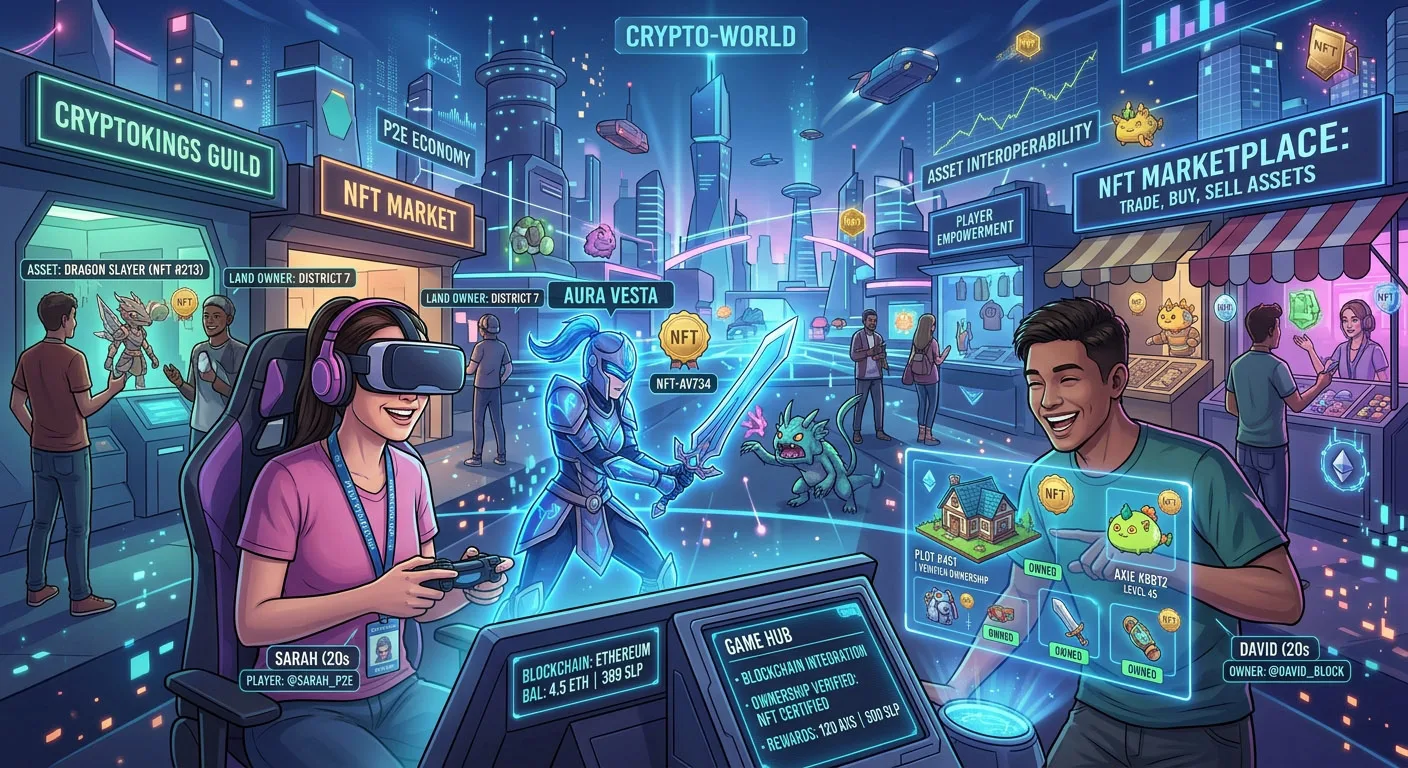
Characters, weapons, land, skins, and other items are often represented as NFTs. Each NFT is unique and can be bought or sold in online marketplaces.
Smart Contracts
Smart contracts automate rewards, trades, and ownership transfers. They remove the need for intermediaries, ensuring fair and transparent gameplay mechanics.
Why P2E Games Are Popular Among Beginners
P2E games have gained attention worldwide, especially among beginners, for several reasons.
First, they provide an opportunity to earn while playing. While profits are not guaranteed, the idea of gaining value from time spent gaming is appealing. Second, many P2E games are designed with simple mechanics, making them accessible to new players. Third, the global reach of blockchain allows players from different regions to participate equally.
For beginners, P2E games can also serve as an introduction to cryptocurrencies, NFTs, and decentralized finance without requiring advanced technical knowledge.
Types of P2E Games Beginners Should Know
Understanding the main categories of P2E games helps beginners choose games that match their interests and skill levels.
Strategy-Based P2E Games
These games focus on planning, resource management, and long-term decision-making. Players often earn rewards by managing digital assets or territories.
Role-Playing Games (RPGs)
RPG-style P2E games allow players to control characters, complete quests, and battle enemies. NFTs usually represent characters or equipment.
Card and Collectible Games
Players collect NFT cards or items and compete against others. Value often depends on rarity and performance.
Simulation and Metaverse Games
These games simulate real-world activities such as farming, building, or trading virtual land. Earnings depend on creativity and strategic use of assets.
Getting Started: Step-by-Step Guide for Beginners
Starting P2E gaming requires preparation. Beginners should follow these essential steps.
Step 1: Learn the Basics of Cryptocurrency
Before playing, beginners should understand basic cryptocurrency concepts, including wallets, private keys, and transactions.
Step 2: Create a Digital Wallet
A crypto wallet is required to store tokens and NFTs. Popular beginner-friendly wallets include MetaMask and Trust Wallet.
Step 3: Choose a Beginner-Friendly P2E Game
Not all P2E games are suitable for beginners. Look for games with low entry costs, active communities, and clear tutorials.
Step 4: Understand the Game Economy
Study how rewards are earned, how tokens are used, and whether assets can be sold easily.
Step 5: Start Small
Beginners should avoid investing large amounts initially. Starting small reduces risk while learning how the system works.
Benefits of P2E Games for Beginners
P2E games offer several advantages, especially for new players.
-
Opportunity to earn digital rewards
-
True ownership of in-game assets
-
Exposure to blockchain technology
-
Global accessibility
-
Community-driven ecosystems
These benefits make P2E gaming attractive to those looking to combine entertainment with learning and potential income.
Risks and Challenges Beginners Must Understand
Despite their advantages, P2E games also carry risks.
Market Volatility
Cryptocurrency prices fluctuate significantly. Earnings may increase or decrease rapidly.
Scams and Fraud
Fake games and phishing attempts are common. Beginners must verify platforms before investing.
High Entry Costs
Some games require expensive NFTs to start playing, which can be risky for beginners.
Regulatory Uncertainty
Rules surrounding cryptocurrency and gaming differ by region and may change over time.
Understanding these risks is essential before committing time or money.
How Beginners Can Stay Safe in P2E Gaming
Safety should always be a priority.
-
Never share private keys
-
Use official websites only
-
Join verified community channels
-
Avoid promises of guaranteed profits
-
Enable wallet security features
Trusted educational resources such as CoinMarketCap’s Learn platform provide helpful beginner information about blockchain and gaming concepts.
Frequently Asked Questions
Conclusion: Is P2E Gaming Right for Beginners?
This Beginner’s Guide to P2E Games shows that play-to-earn gaming offers exciting opportunities alongside real risks. For beginners, the key to success lies in education, patience, and careful decision-making. P2E games should be approached as a learning experience first, not a guaranteed income source.
With responsible participation, beginners can enjoy the benefits of blockchain gaming while building valuable digital skills for the future.

Discussion (0)
Join the conversation