Introduction
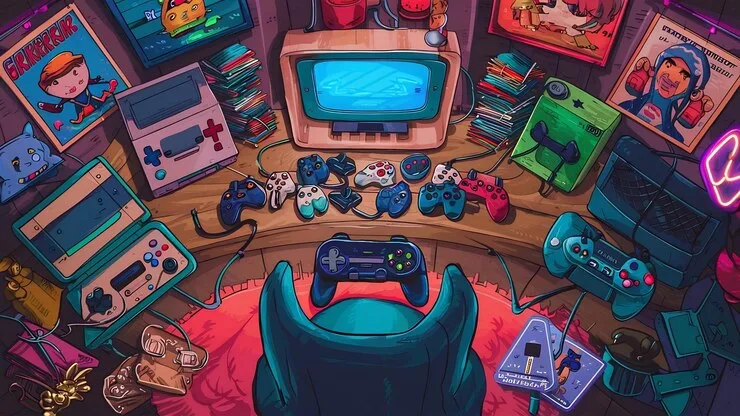
The evolution of video games is one of the most remarkable technological and cultural journeys of the modern era. What began as simple pixelated entertainment has grown into a multi-billion-dollar global industry that influences art, education, and social interaction. From early experiments with cathode-ray tubes to today’s hyper-realistic virtual worlds, video games have not only evolved in technology but also in purpose, storytelling, and accessibility.
In this article, we’ll explore the evolution of video games across decades, examining how innovations in hardware, software, and the internet shaped the experiences millions of players enjoy today.
The Birth of Video Games (1940s–1970s)
The story of video games begins not in living rooms but in laboratories. In the 1940s, scientists experimented with interactive electronic devices. One of the earliest prototypes, the Cathode-Ray Tube Amusement Device, developed by Thomas T. Goldsmith Jr. and Estle Ray Mann, was a precursor to what we recognize as modern gaming.
By the 1960s, computer scientists at MIT created Spacewar!, a simple space combat simulator that ran on the PDP-1 computer. It was revolutionary for its time, demonstrating how digital computing could power interactive entertainment.
Early Innovators and Pioneers
Among the early pioneers was Ralph Baer, often called the Father of Video Games. His creation of the Magnavox Odyssey in 1972 marked the first home gaming console. Soon after, Nolan Bushnell introduced Pong, an arcade sensation that ignited a cultural phenomenon and established the video game industry as a commercial force.
The Rise of Arcade Games
The late 1970s saw the golden glow of arcade cabinets lighting up malls and restaurants worldwide. Titles like Space Invaders (1978) and Pac-Man (1980) became household names. Arcades served as social hubs, uniting people through competition and shared excitement — a foreshadowing of the online communities to come.
The Golden Age of Gaming (1980s)
The 1980s marked the golden age of video games, a period defined by rapid innovation and mainstream adoption. Home consoles brought gaming into the living room, transforming it from a novelty into a staple of family entertainment.
The Birth of Consoles and Home Entertainment Systems
The launch of the Atari 2600 in 1977, followed by Nintendo Entertainment System (NES) and Sega Master System, revolutionized home gaming. Players could now experience arcade-quality games at home, with iconic titles like Super Mario Bros., The Legend of Zelda, and Sonic the Hedgehog capturing imaginations worldwide.
8-Bit and 16-Bit Eras
As technology advanced, so did the depth and artistry of games. The 8-bit and 16-bit eras introduced smoother animations, richer colors, and more complex storylines. This era also laid the groundwork for modern franchises still thriving today.
The 1990s – The Dawn of 3D Graphics
The 1990s ushered in a new dimension — literally. With the introduction of 3D graphics, video games began offering immersive worlds and realistic perspectives.
Transition from 2D to 3D Worlds
Consoles like the Sony PlayStation and Nintendo 64 redefined what games could look like. Titles such as Super Mario 64 and Final Fantasy VII demonstrated that games could tell rich, cinematic stories while engaging players with dynamic gameplay.
The Rise of PC Gaming and LAN Parties
Parallel to console innovation, PC gaming emerged as a powerful force. LAN parties and online multiplayer games like Quake and StarCraft built communities that transcended geography, laying the foundation for modern online gaming ecosystems.
The 2000s – Online Revolution and Global Connectivity
The 2000s connected players like never before. With broadband internet and networked consoles, online multiplayer became the new frontier.
Online Gaming Platforms and Multiplayer Networks
Xbox Live, PlayStation Network, and Steam enabled players to connect globally. Games such as World of Warcraft and Call of Duty transformed gaming into an interconnected social experience.
The Birth of eSports and Competitive Gaming
Professional gaming, or eSports, exploded during this era. Tournaments attracted millions of viewers, and gaming evolved into both entertainment and a viable career. Titles like Counter-Strike and League of Legends became competitive phenomena.
The 2010s – The Age of Mobile and Indie Games
The 2010s marked a turning point in the accessibility and creativity of the gaming world. For the first time, nearly everyone with a smartphone became a potential gamer. Mobile technology made gaming ubiquitous — playable anytime, anywhere. Simultaneously, indie developers disrupted the industry by introducing fresh ideas and artistic innovation.
Smartphones and the App Store Revolution
The introduction of Apple’s App Store (2008) and Google Play fundamentally reshaped the industry. Mobile gaming became mainstream through viral titles like Angry Birds, Candy Crush Saga, and Clash of Clans. These games appealed to casual audiences, expanding the gaming demographic beyond traditional players.
By mid-decade, mobile gaming revenue began to surpass console and PC gaming combined. Games no longer required expensive hardware — just a touchscreen. The ease of development and global reach empowered independent creators to compete with corporate giants.
Indie Developers and Creative Freedom
The rise of independent game studios transformed the creative landscape. Without corporate constraints, indie developers experimented with art styles, narratives, and mechanics that major studios avoided. Masterpieces like Minecraft, Undertale, and Stardew Valley proved that innovation and storytelling could triumph over big budgets.
Platforms like Steam and Itch.io offered indie games global visibility, while crowdfunding sites such as Kickstarter allowed developers to bring their visions to life with community support. This democratization of game creation encouraged diversity and authenticity in game design.
Modern Era (2020s–Present) – The Future of Gaming
As we step into the 2020s, the evolution of video games has accelerated with cutting-edge technologies. Immersive environments, artificial intelligence, and seamless connectivity have redefined how games are made, played, and shared.
Virtual Reality (VR) and Augmented Reality (AR)
Virtual Reality (VR) and Augmented Reality (AR) are transforming how players experience games. With devices like Oculus Quest, PlayStation VR, and HoloLens, players can step into fully interactive digital worlds.
Games such as Beat Saber and Half-Life: Alyx offer sensory-rich experiences, blurring the line between the virtual and the physical. Meanwhile, AR titles like Pokémon GO bring gaming into the real world, merging imagination with everyday environments.
Cloud Gaming and Subscription Models
Cloud gaming platforms, including Xbox Cloud Gaming, NVIDIA GeForce Now, and Amazon Luna, enable players to stream games directly to their devices without downloading. This model reduces hardware limitations, allowing high-quality gaming on mobile phones, tablets, and low-spec PCs.
Subscription-based services such as Xbox Game Pass and PlayStation Plus provide instant access to vast libraries of games, similar to how Netflix transformed entertainment consumption.
Artificial Intelligence and Personalized Gaming
Artificial Intelligence is revolutionizing the gaming industry by creating adaptive gameplay experiences. Modern AI can adjust difficulty levels in real time, simulate realistic opponents, and even write procedural narratives. AI-driven tools also assist developers in generating expansive open worlds and lifelike animations, improving development efficiency and creativity.
Cultural and Economic Impact of Video Games
The evolution of video games extends beyond entertainment; it’s a driving force in global culture, economics, and social behavior.
Representation and Storytelling in Modern Games
Contemporary games emphasize inclusivity, representation, and emotional storytelling. Titles like The Last of Us, Celeste, and Life is Strange tackle complex social issues, highlighting identity, diversity, and empathy. Gaming has become a legitimate narrative art form, influencing films, literature, and education.
Economic Growth and Career Opportunities
The gaming industry generates over $200 billion annually, surpassing movies and music combined. This growth has fueled diverse career paths — from game development and design to marketing, content creation, and eSports.
Streaming platforms like Twitch and YouTube Gaming have created new forms of digital entrepreneurship. Professional streamers and content creators now shape gaming trends and foster vibrant online communities.
For further insights into gaming’s economic influence, explore the Entertainment Software Association’s 2024 Industry Report — a trusted external source on gaming’s global reach.
The Future of Gaming – Predictions and Possibilities
As technology continues to evolve, gaming is expected to merge even more deeply with daily life. The next phase will likely combine virtual environments, AI, and blockchain technologies to create fully immersive ecosystems.
Metaverse and Digital Worlds
The metaverse, a shared virtual space where users can interact, play, and create, represents the next step in gaming’s evolution. Companies like Epic Games and Meta are investing heavily in this frontier, envisioning persistent, interactive worlds that blend entertainment, commerce, and social engagement.
Gamification and Everyday Applications
Beyond recreation, game mechanics are now used in education, healthcare, and corporate training — a concept known as gamification. Learning platforms use rewards and challenges to motivate students, while fitness apps turn exercise into engaging missions. This blending of fun and function underscores gaming’s lasting impact on human behavior and motivation.
Frequently Asked Questions
Conclusion: The Never-Ending Game of Innovation
The evolution of video games is a story of human creativity, technological innovation, and boundless imagination. From the blinking lights of the 1940s to today’s immersive metaverse, games have transformed how we play, learn, and connect.
What was once a niche hobby has become a defining cultural and technological force — bridging generations, inspiring industries, and shaping the future of digital life. As technology advances, one truth remains constant: gaming will continue to evolve, just like the people who play them.


Discussion (0)
Join the conversation