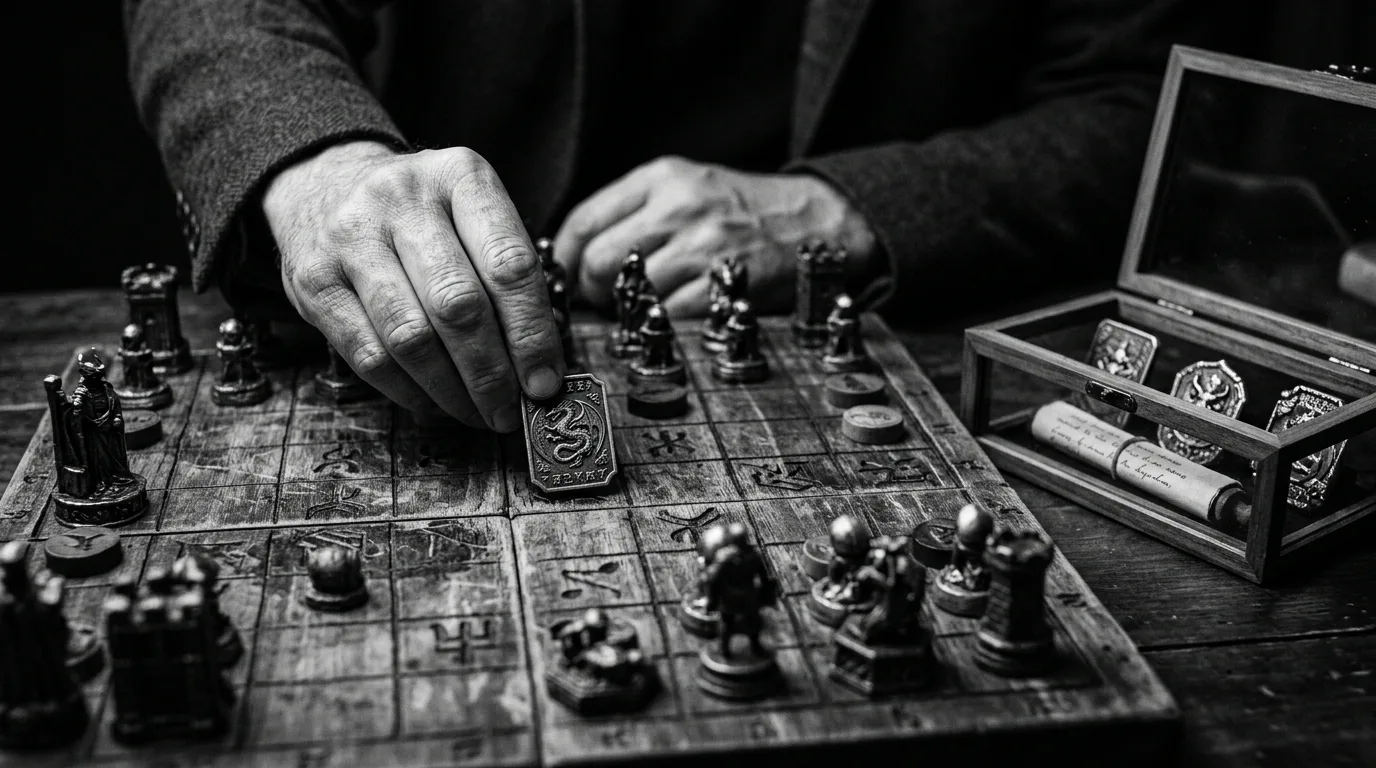
In-game NFTs give digital game assets a different economic and technical status from ordinary inventory items. Rather than existing only inside one title and its database, they can be represented as a non-fungible token with verifiable ownership, scarcity, and transaction history. This distinction changes how players acquire, use, trade, and preserve virtual property.
What Makes In-Game NFTs Different From Traditional Game Items
Traditional game items are generally database records controlled by the publisher. A sword, skin, or character may appear unique to a player, but its permissions, availability, and value remain subject to server rules, account access, and the game’s terms of service. Developers can rebalance an item, remove it, duplicate it, or disable trading without consulting owners. The asset is therefore licensed access rather than independently transferable property.
Why in-game NFTs Change the Ownership Model
By contrast, in-game NFTs can provide a public, cryptographically verifiable record that identifies a particular asset and its current holder. A smart contract may enforce issuance limits, royalty rules, or transfer conditions, while a blockchain ledger supplies an auditable provenance trail. This architecture separates ownership data from the game client, although the playable utility still depends on developer integration. Holding a token does not automatically guarantee access to a server, future updates, competitive eligibility, or permanent functionality.
This distinction also affects governance: publishers may retain control over gameplay while token holders retain a narrower claim to the recorded asset.
The practical difference is portability and market behavior. A conventional item usually cannot leave its original ecosystem; a blockchain-based asset may be held in an external wallet, sold through a compatible marketplace, or recognized by multiple applications. Ethereum NFTs demonstrate how an asset can exist independently of one game, but cross-game use requires shared standards, metadata interpretation, security controls, and deliberate design. These systems also introduce fees, scams, wallet-loss risks, regulatory questions, and speculative incentives. Consequently, in-game NFTs are not merely upgraded cosmetics: they are programmable ownership instruments whose value combines scarcity, utility, community demand, and confidence in the issuer.
How In-Game NFTs Work: Ownership, Smart Contracts, and Wallets
How in-game NFTs represent digital ownership
An in-game NFT is a blockchain-recorded asset linked to a distinct item, character, plot of land, or collectible. Unlike a conventional game asset stored solely in a publisher’s database, its ownership record is maintained on a distributed ledger. The token does not usually contain the complete artwork or game logic; instead, it references metadata that identifies the asset and defines how compatible software should display or use it. This distinction enables verifiable scarcity and transferable ownership, although practical control still depends on the game’s servers and policies.
Each token has a unique identifier and contract address. Together, these details distinguish one asset from another, even when two items share the same visual design. A non-fungible token may also include attributes such as rarity, durability, level, or creator royalties. Some games store metadata on decentralized file systems, while others use centralized servers, creating different levels of persistence and censorship resistance.
Smart contracts and asset transactions
Smart contracts are programs deployed on a blockchain that enforce predefined rules without requiring a central settlement operator. They can mint new assets, assign them to wallet addresses, verify transfers, and distribute royalties. When a player buys or sells an item, the transaction is signed cryptographically and submitted to the network. Validators confirm the transaction, after which the public ledger records the new holder.
Contract design determines whether an asset can be upgraded, burned, rented, or used across multiple titles. Ethereum NFTs may rely on standards such as ERC-721 or ERC-1155, while other networks implement comparable interfaces with different costs and performance characteristics. Gas fees, confirmation times, and contract vulnerabilities therefore affect the player experience as much as the game’s interface does.
Wallets, keys, and player control
Players access in-game NFTs through compatible crypto wallets rather than conventional account inventories. A wallet stores private keys and signs transactions; it does not literally store the asset, which remains recorded on-chain. Losing a seed phrase can permanently remove access, while phishing, malicious approvals, or counterfeit contracts can expose valuable items. Games should therefore provide clear signing prompts, support hardware or custodial options, and separate gameplay permissions from high-value assets. In practice, ownership is strongest when the contract, wallet, metadata, and game integration remain available and interoperable.
Top Games Using In-Game NFTs and Their Economic Models
Why in-game NFTs Matter
Blockchain games convert digital ownership into a market structure. A non-fungible token records a unique asset on-chain and can represent a character, parcel, card, or credential. The strongest designs connect scarcity with repeatable utility, giving assets a role in gameplay rather than relying solely on speculative demand.
Leading Economic Models
Axie Infinity combines collectible creatures with a breeding economy. Players use Axies in battles, while breeding consumes resources and creates new supply. Its model demonstrates how sinks, generation limits, and marketplace fees can regulate inflation. However, excessive dependence on new entrants can weaken rewards when user growth slows.
Gods Unchained applies an ownership model to digital trading cards. Players earn or acquire cards, trade them externally, and assemble decks with different strategic values. Because cards have functional utility, rarity is supported by tournament demand rather than scarcity alone. Its Ethereum NFTs also illustrate the advantages and costs of public-chain settlement, including transparency and transaction fees.
Sorare uses fantasy sports collectibles. Card value reflects athlete performance, scarcity, season status, and competition eligibility. This creates a data-driven economy in which rewards are linked to real-world events. The model can sustain engagement, but licensing expenses and unpredictable player performance introduce operational risk.
Decentraland focuses on virtual land, wearables, and experiences. Landowners can develop venues, lease space, or monetize branded events, making the platform closer to a digital property market than a conventional game. Its success depends on traffic and creator activity, not simply on limited supply.
Evaluating Sustainability
Across these examples, in-game NFTs work best when ownership supports measurable utility, controlled issuance, and clear redemption or trading rules. Developers must balance liquidity with gameplay integrity: if assets become primarily financial instruments, pay-to-win concerns and market volatility can erode retention. Sustainable economies therefore combine transparent contracts, royalty policies, fraud controls, and meaningful non-speculative uses. In-game NFTs are most resilient when player demand comes from enjoyment first and potential resale value second.
In-Game NFTs, Marketplaces, and Player-Driven Economies
In-game NFTs represent digitally scarce assets whose ownership can be verified independently of a game client. Unlike conventional inventory items stored in a publisher’s database, these assets are recorded on a blockchain through smart-contract transactions. The model can support characters, land, equipment, cosmetic items, and access rights, although technical ownership does not automatically guarantee usability, rarity, or long-term value. Game developers must therefore connect token ownership to authoritative game servers, metadata systems, and clearly defined utility rules.
How in-game NFTs Function in Marketplaces
A marketplace provides the transaction layer for listing, pricing, bidding, settlement, and asset transfer. It may be operated by the studio, integrated through a third-party protocol, or designed as a hybrid system. Ethereum NFTs, for example, can benefit from established wallet infrastructure and liquidity, but transaction fees, confirmation times, and network congestion may affect the player experience. Layer-two networks and application-specific chains can reduce these constraints, provided that bridges and custodial services are secure.
Royalty mechanisms allow creators or publishers to receive a percentage of secondary sales, but enforcement varies by marketplace and token standard. A non-fungible token can encode ownership, provenance, and transfer conditions; it cannot by itself prevent duplication of visual content, guarantee scarcity, or preserve an item’s function after a server closes. Robust implementations separate immutable asset identity from mutable metadata, enabling balance patches without rewriting historical ownership records.
These systems create player-driven economies in which users act as collectors, traders, builders, and service providers. Price discovery emerges from supply, demand, player retention, competitive utility, and speculation. Designers should monitor concentration of ownership, wash trading, bot activity, and pay-to-win incentives. Economic dashboards can track transaction volume, unique holders, velocity, and sink-to-source ratios, while circuit breakers or listing limits can reduce destabilizing volatility.
The strongest implementations treat blockchain assets as one component of a broader economy rather than as the game’s central reward. Transparent fees, exportable inventories, accessible wallets, and meaningful in-game utility improve trust. Governance also matters: players need clear policies for fraud recovery, contract upgrades, banned accounts, and marketplace disputes. When these controls align with compelling gameplay, digital ownership can reinforce community participation without replacing the design fundamentals that make a game enjoyable.
Security, Regulation, and Sustainability Risks
Blockchain-based game economies introduce risks that differ from those of conventional digital marketplaces. Ownership records may be transparent, but the surrounding infrastructure—including wallets, smart contracts, bridges, exchanges, and game servers—can still fail. A tokenized asset is not automatically secure, legally enforceable, or environmentally responsible simply because its provenance is recorded on a public ledger.
Security Threats Affecting in-game NFTs
Players face phishing, private-key theft, malware, counterfeit collections, and social-engineering attacks. Smart-contract vulnerabilities can allow unauthorized transfers, duplicated claims, or permanent loss of assets. A compromised marketplace account may expose an entire inventory in minutes. Custody is also unclear: users may technically own a non-fungible token while the game publisher controls the metadata, rendering service, or permission to use the item. If a server disappears or a contract is upgraded improperly, practical utility can vanish despite immutable transaction history.
- Audits reduce contract risk but cannot guarantee secure wallets or honest operators.
- Multifactor authentication, hardware wallets, withdrawal limits, and transaction alerts provide layered protection.
- Games should disclose whether assets are self-custodied, platform-custodied, or dependent on centralized metadata.
Regulatory and Consumer-Protection Uncertainty
Regulators may classify digital collectibles, reward systems, or tradable assets differently across jurisdictions. In-game NFTs could trigger obligations involving securities, gambling, taxation, money transmission, advertising, age verification, and anti-money-laundering controls, particularly when rarity and resale value are emphasized. Consumer law may also challenge misleading scarcity claims, undisclosed royalties, sudden rule changes, or restrictions on withdrawals. Developers operating across borders must define ownership, licensing, refunds, dispute resolution, and platform liability in accessible terms. Compliance requirements can change rapidly, creating operational risk for publishers and investors.
Environmental and Infrastructure Costs
Sustainability depends on the network, transaction volume, validator model, and lifecycle of the hardware supporting the ecosystem. Proof-of-stake systems generally consume less energy than proof-of-work networks, but lower energy use does not eliminate emissions, electronic waste, or data-center impacts. Ethereum NFTs, for example, may have a smaller operational footprint after network upgrades, yet minting, trading, hosting, and constant gameplay still consume resources. Developers should favor efficient chains, batch transactions, durable metadata, and transparent impact reporting rather than relying on vague carbon-neutral claims.
Responsible design therefore treats in-game NFTs as a risk-management issue, not merely a monetization feature. Independent audits, clear disclosures, recoverable accounts, jurisdictional reviews, and measurable sustainability targets are essential before deployment.
The Future of In-Game NFTs in Mainstream Gaming
Mainstream adoption will depend less on speculative trading than on dependable utility. Developers are testing ownership models in which digital items function as access credentials, progression assets, cosmetic equipment, or tickets to persistent events. The technical challenge is to preserve game balance while making ownership verifiable across wallets, platforms, and marketplaces. A successful asset economy must therefore separate scarcity from competitive advantage: rare items can signal status without granting uncapped power.
The role of in-game NFTs in interoperability
Interoperability will likely emerge incrementally, not through a universal item standard. Metadata schemas, permissioned APIs, and account-abstraction layers can let a sword, avatar, or collectible retain selected properties between compatible titles. However, portability raises difficult questions about intellectual property, fraud prevention, moderation, and data permanence. Studios may expose visual identity or achievement history while restricting gameplay effects. This controlled portability offers practical benefits without forcing every developer to support a common runtime.
Infrastructure and regulation
For publishers, the preferred architecture may combine off-chain game state with on-chain proofs of ownership. A blockchain can record transfers and provenance, while servers handle latency-sensitive combat, matchmaking, and anti-cheat enforcement. Layer-2 networks and optimized wallets can reduce transaction costs, but user experience remains decisive; players should not need to understand gas fees or seed phrases. Regulatory treatment will also influence monetization, especially where tradable assets resemble financial products or involve minors. Clear disclosures, spending controls, reversible support workflows, and robust custody options will be more valuable than raw volume.
Operational priorities include:
- Auditable royalty and marketplace rules.
- Privacy-preserving identity and age verification.
- Reliable recovery for compromised accounts.
Ultimately, in-game NFTs will become mainstream only when they disappear into intuitive product design. Whether implemented through a non-fungible token or Ethereum NFTs, ownership must enhance agency rather than distract from play. The strongest games will treat digital property as infrastructure: measurable, interoperable where useful, and subordinate to compelling mechanics. It matters for players, publishers, and creators. In conclusion, sustainable adoption will be determined by retention, fairness, and player value—not by token volume alone.
Frequently Asked Questions
What are in-game NFTs?
In-game NFTs are unique digital assets recorded on a blockchain and used within video games. They can represent items such as characters, weapons, skins, land, or collectibles.
How do games use NFTs?
Games may use NFTs to give players verifiable ownership of digital items. Depending on the game, players can collect, trade, upgrade, or use these assets during gameplay.
Can players sell or trade in-game NFTs?
Many NFT games allow players to trade or sell eligible items through built-in or external marketplaces. Transaction fees, platform rules, and game-specific restrictions may apply.
Do I need cryptocurrency to play NFT games?
Some games can be played without cryptocurrency, while others require crypto to purchase assets or pay blockchain transaction fees. The requirements vary by game, network, and marketplace.
Are in-game NFTs valuable?
The value of an in-game NFT depends on factors such as rarity, usefulness, player demand, and the reputation of the game. Prices can change significantly, and some assets may lose most or all of their value.
Can NFTs be used across different games?
A few projects are designed to support NFT use across multiple games or platforms. However, most NFTs only work within the ecosystem that created and supports them.
What are the risks of games that use NFTs?
Players may face financial losses, scams, hacking, fluctuating prices, and unclear game support. It is important to research the project, protect wallet credentials, and avoid spending more than one can afford to lose.
How do I start playing a game that uses NFTs?
Start by reviewing the official game website, supported blockchain, wallet requirements, and marketplace rules. Create a compatible wallet if needed, follow security best practices, and begin with free or low-cost features before buying assets.
Discussion (0)
Join the conversation