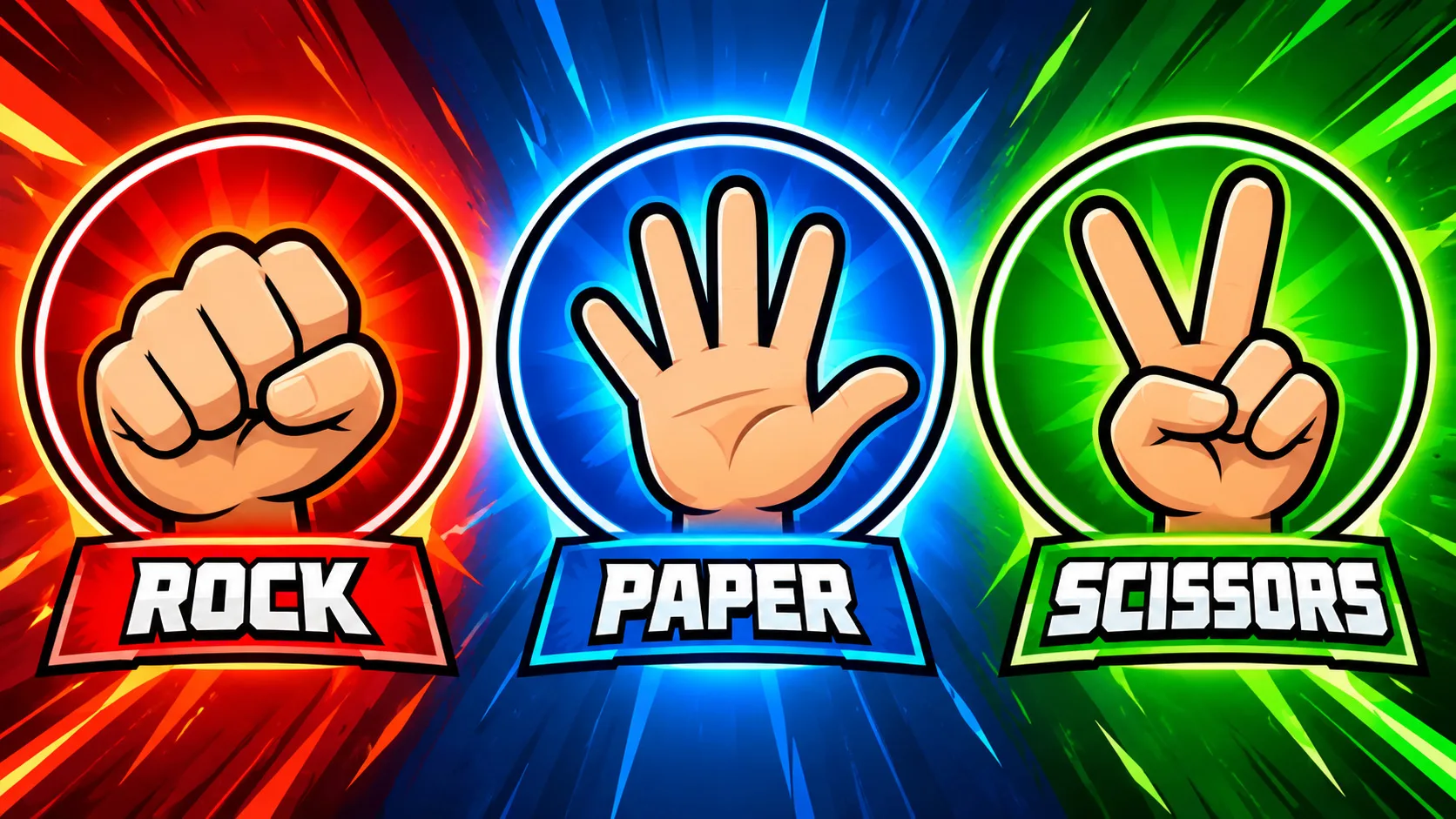
Rock paper scissors is a quick, easy duel where two players test timing, observation, and a little luck. Although the hand game takes only seconds to play, clear rules make every throw fair and every win easy to identify.
Rock Paper Scissors Duel: The Rules and Winning Conditions
A standard duel uses three gestures: rock, paper, and scissors. Each player secretly chooses one and reveals it at the same moment. Rock is shown as a closed fist, paper as a flat hand, and scissors as two extended fingers. Players usually count down together—“rock, paper, scissors, shoot”—to prevent anyone from reacting to the other person’s move.
How rock paper scissors Decides a Winner
Every gesture defeats one option and loses to another. Rock crushes scissors, scissors cut paper, and paper covers rock. This circular pattern means no single choice is automatically strongest. If both players reveal the same symbol, the round is a tie, often called a draw, and the players simply repeat it.
- Choose a gesture before the final word of the countdown.
- Reveal it at the same time as your opponent.
- Compare the symbols using the three winning matchups.
In a single-round duel, the winner is the player whose symbol beats the other player’s symbol. For a best-of-three match, the first person to win two rounds takes the duel. Longer contests may use a target score, such as five points, with one point awarded for each decisive round. Tied rounds do not add points unless the players agree on a different house rule.
Fair play matters as much as speed. Keep your hand still until the reveal, use the same countdown each time, and make gestures clearly visible. Players can also agree beforehand whether a late throw, an unclear sign, or a countdown mistake requires a replay. Learning a little rock paper scissors history can add cultural context, while game theory explains why unpredictable choices are useful. Still, the best practical strategy is simple: watch patterns, avoid becoming predictable, and remember that rock paper scissors rewards calm timing more than complicated tactics.
Why Rock Paper Scissors Is More Psychological Than It Seems
At first glance, rock paper scissors looks like a tiny contest of reflexes: choose a symbol, reveal it, and see whose hand wins. Yet the result often depends less on speed than on what each player believes the other player will do. That makes every round a miniature study in attention, confidence, and deception.
Reading the Person, Not Just the Hand
Before making a move, players collect clues. Does your opponent repeat the same choice after winning? Do they rush when nervous, or pause to appear unpredictable? These tiny behaviors become signals, even when they mean nothing. A confident player may assume a beginner will choose rock first, while a cautious player may avoid that obvious opening. Reading these habits can be useful, but it can also create a trap: once you start searching for patterns, you may see them everywhere.
That uncertainty is where the mind game begins. A player might throw paper because rock feels predictable, then switch to scissors after noticing hesitation. Another may repeat a winning sign, hoping the opponent expects a change. These choices are reactions to expectations. Duelists manage two battles at once: the visible contest of gestures and the invisible contest of guesses. They watch timing and previous rounds while trying not to reveal their own plan.
Why Patterns Feel So Powerful
Part of the appeal comes from balance among three choices. Each symbol defeats one option and loses to another, so no move is permanently safe. The structure has helped the game travel across cultures; anyone exploring rock paper scissors history finds versions with different names, gestures, and traditions. It also offers a neat introduction to game theory: if both players choose randomly, neither gains a lasting advantage. In real matches, though, people favor familiar moves, chase lucky streaks, and react emotionally to losses.
Even a casual match reveals these pressures. A player who loses twice may become desperate to change, while a player who wins may become overconfident. Good competitors notice that shift and adjust without turning every round into an exhausting calculation. The fun comes from that delicate balance between instinct and analysis.
That human layer is why a duel can feel personal, even when rules are fair. Winning may come from spotting a habit, breaking your own, or resisting the urge to counter a move that has not happened. The strongest strategy is not simply unpredictability. It is staying aware of your emotions while observing the other person. In a close match, patience can matter as much as cleverness, and a well-timed pause can say plenty.
Rock Paper Scissors Strategy: Read Patterns and Predict Throws
Strategy starts before the first throw. In a duel, every choice offers information, even when it looks random. The goal is not to guess perfectly; notice habits, test reactions, and stay unpredictable yourself.
Rock Paper Scissors: Read the Room
Players often reveal patterns without realizing it. Many open with rock because it feels strong, repeat a winning throw, or switch after a loss. Watch the sequence rather than focusing on one dramatic move. If your opponent throws the same sign twice, they may expect a different counter next, making their likely response worth considering. Yet a sharp player may anticipate that thought. Pattern reading works best as a short-term clue, not a guaranteed rule.
Use the first few exchanges to build a simple profile. Does your rival favor one sign after winning? Do they mirror your previous throw? Do they pause before choosing? Small cues can help predict the next selection, especially in a best-of-three match. Still, avoid locking onto a theory too early: a pattern can be deliberate bait.
Build a Flexible Throwing Rhythm
To remain difficult to read, vary your timing and choices. Randomizing mechanically can still create patterns, so use a personal rhythm instead. After two rounds, choose the option you genuinely favor, then deliberately break expectations later. In a hand game built on quick decisions, a mixed strategy keeps opponents from exploiting your preferences. This idea echoes game theory, where unpredictability protects you from easy counterplay.
- Track repeated choices, but treat them as clues rather than promises.
- Notice emotional shifts after wins, losses, or close calls.
- Change your plan when your rival appears to have decoded it.
The strongest prediction is often emotional rather than mathematical. A frustrated player may repeat a move that just succeeded, while a confident player may try something flashy. Keep your own emotions quiet, and watch for changes after a point swings. If you lose one round, do not rush to “correct” it; that response is exactly what an observant rival may be waiting for. The rock paper scissors history also shows how simple rules can reward flexible thinking.
Common Mistakes That Cost Players the Duel
A duel can look simple, but small habits quickly turn a promising round into a loss. Fortunately, most errors are easy to spot. Whether you play casually or under pressure, awareness often matters more than lightning-fast hands.
Rock paper scissors: Mistakes Before the Throw
Rushing into a choice is common. Players feel they must react instantly, so they throw before noticing an opponent’s rhythm. Slow down, watch the countdown, and decide deliberately. A calm pause is not hesitation; it is control. Avoid changing your mind: a half-formed gesture can become an accidental throw.
Another frequent error is relying on a fixed opening pattern. Using the same sign every time feels comfortable, but it gives an observant rival useful information. The opposite mistake is trying to be wildly random. Randomness without a plan can become emotional guessing. Notice what just happened, then choose a response without assuming you can read your opponent’s mind.
Players also forget that a duel is a conversation. Facial expressions, sighs, or laughter can reveal frustration or confidence. Keep your own reactions neutral after a disappointing round. Do not celebrate so loudly that you announce your next intention, and do not stare at an opponent’s hand. Manners protect the fun and reduce distractions.
In a longer match, avoid chasing a lost round. After losing twice to the same sign, you may overcorrect and choose its obvious counter every time. That makes the next move predictable. Treat each throw as fresh information, not a debt you must repay immediately.
Even a knowledge of game theory can tempt players to overthink. You do not need charts or a perfect probability model. A balanced choice protects you from becoming easy to exploit. Some players study rock paper scissors history while ignoring the person across from them. Patterns, timing, and composure matter more than trivia.
The best correction is simple: practice timing, agree on rules, and keep gestures clear. If a round feels confusing, pause and reset instead of arguing. Most importantly, enjoy the duel. In rock paper scissors, a clever comeback feels great, but respect makes every match better.
Fun Ways to Make a Rock Paper Scissors Duel More Exciting
A classic duel is fun on its own, but a few creative twists can turn a quick decision into a memorable contest. Whether you are playing with friends, warming up a party, or settling a friendly debate, these ideas add suspense without making the rules complicated.
Add a Twist to Every Round
Give each match a playful theme. Players might use superhero names, animal sounds, dramatic poses, or accents before revealing their choice. You can also introduce a silent round, where everyone communicates only with gestures, or a speed round that allows just three seconds to decide. For a history-inspired challenge, ask players to invent a new hand sign based on rock paper scissors history, then explain how it could fit into the familiar winning cycle.
- Best-of-five showdown: The first person to win three rounds takes the match.
- Risk round: A player may call for double points before throwing, but only once per duel.
- Mystery rule: Write one secret bonus rule on a card and reveal it after the first round.
- Soundtrack battle: Change the music after every point to build comic tension.
Turn rock paper scissors Into a Mini Tournament
For a group, create a simple bracket and let winners advance while other players cheer them on. Add titles such as Most Dramatic Throw, Best Bluff, or Quickest Victory so everyone has a reason to stay involved. A small prize, like choosing the next song or skipping a chore, can make each match feel meaningful.
You can even borrow a little game theory by asking players to predict an opponent’s habits. Does someone always begin with rock? Do they switch after a loss? Encourage participants to notice patterns, but remind them that overthinking can be just as risky as guessing. The most entertaining strategy is often to stay unpredictable.
Finally, keep the atmosphere light. Celebrate clever plays, allow rematches after especially funny mistakes, and rotate the referee role so everyone gets involved. With a few imaginative rules, rock paper scissors becomes more than a tie-breaker; it becomes a lively social game that works for nearly any age or occasion.
Practice Drills for Faster, Smarter Decisions
Speed and strategy improve together when practice feels focused rather than repetitive. The best drills train your eyes, timing, and ability to notice patterns without making you overthink every throw. Set a short timer, keep score, and review one lesson after each session.
Rock paper scissors Reaction Drill
Start with a partner calling “ready” at unpredictable intervals. On the next beat, both players throw. Gradually shorten the pause between the call and the throw, but keep your choices deliberate. This exercise builds confidence under pressure and helps your hand follow your decision quickly. If you practice alone, use a random timer or alternate between three planned signals.
Pattern and Counter Practice
Play five rounds while secretly choosing a simple goal, such as opening with paper or switching after a win. Your partner should try to identify your habit. Then reverse roles. This introduces a practical lesson from game theory: predictable behavior is easy to exploit, while controlled variety keeps an opponent uncertain. Do not chase perfect randomness; aim for choices that are difficult to read.
- Pause and predict: Before each throw, guess what your opponent will choose and write down why.
- Change one variable: Repeat the same drill while altering only your opening move, response to a loss, or response to a tie.
- Review the results: After ten rounds, look for habits rather than isolated mistakes.
For a more advanced challenge, study a few notes about rock paper scissors history, then create scenarios that test instinct versus planning. Try a speed round, a first-to-five match, and a game where you must announce your intended strategy afterward. These formats reveal whether your choices hold up when the pace changes.
Most importantly, keep sessions short and upbeat. Five thoughtful minutes can teach more than a long match played on autopilot. In conclusion, regular drills make rock paper scissors decisions faster, calmer, and smarter, giving you a clear edge when the next duel begins.
Frequently Asked Questions
How do you play a Rock Paper Scissors duel?
Two players simultaneously choose rock, paper, or scissors. Rock beats scissors, scissors beat paper, and paper beats rock.
What happens if both players choose the same symbol?
The round is a tie. Both players usually choose again until one player wins.
How is the winner determined in a duel?
A player wins by choosing the symbol that defeats the opponent’s choice. For example, paper wins against rock, while scissors wins against paper.
Can Rock Paper Scissors be played in a best-of-three format?
Yes, players can compete in multiple rounds. The first player to win two rounds in a best-of-three duel is the overall winner.
Is Rock Paper Scissors based on strategy or luck?
The basic game is largely based on luck when choices are made simultaneously. However, players may try to predict patterns in their opponent’s choices to gain an advantage.
Discussion (0)
Join the conversation