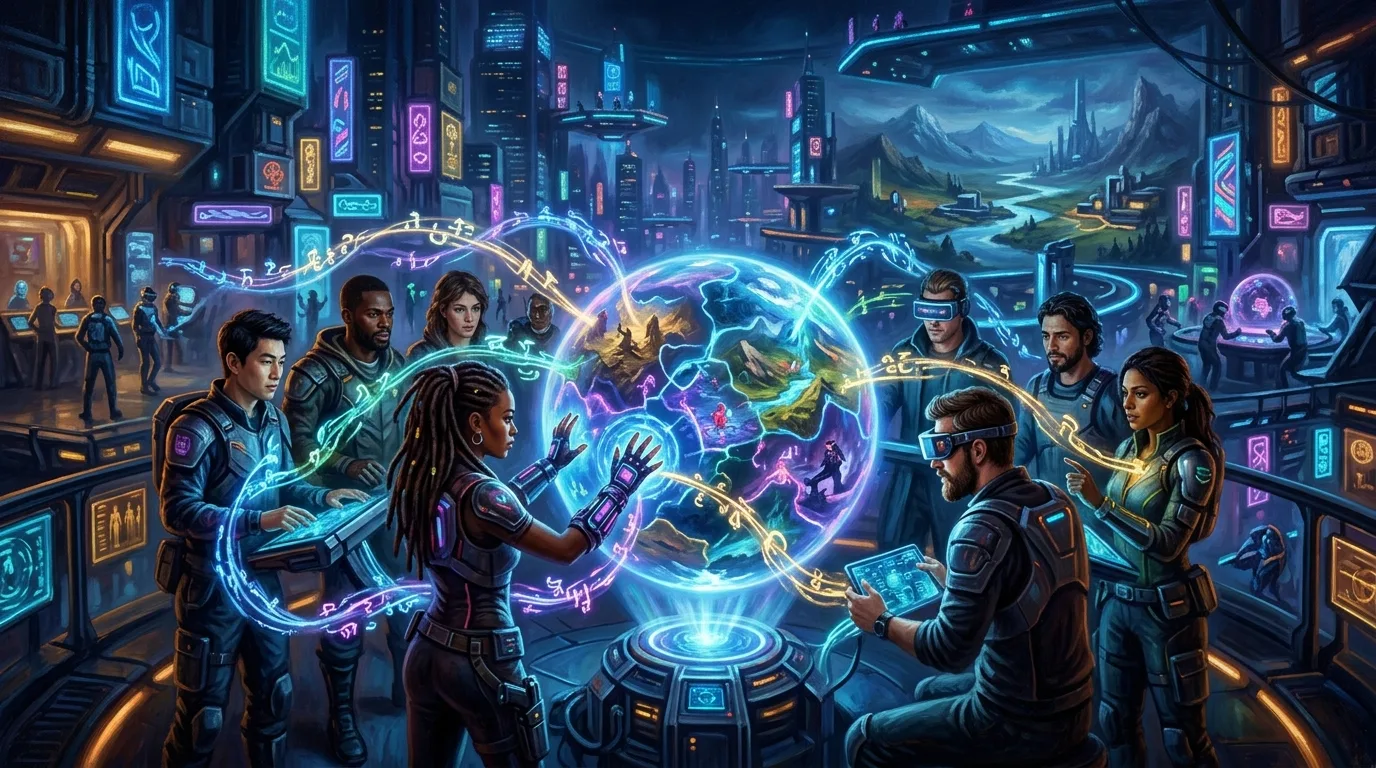
Online gaming language is entering a more structured phase as platforms blend voice chat, livestreaming, and persistent virtual worlds. What began as shorthand for speed and identity now influences interface design, moderation policy, and player safety.
How Online Gaming Language Is Evolving
The next generation of player communication will be multimodal and context-aware. Text messages remain efficient for tactical coordination, but speech-to-text systems, gesture input, machine translation, and semantic classifiers will reduce friction across languages. Game engines can attach metadata such as team role, urgency, or location to a message, allowing interfaces to prioritize relevant calls without flooding every participant. This is particularly valuable in large-scale raids and competitive matches.
The technical foundations of online gaming language
At the protocol layer, low-latency delivery is becoming a defining requirement. WebRTC real-time communication can support responsive voice and video channels, while edge servers and adaptive bitrate control help maintain quality under unstable network conditions. Developers are also standardizing event schemas for chat, emotes, moderation signals, and voice activity. These structured records make it easier for artificial intelligence tools to detect harassment, identify coordinated abuse, and summarize long discussions without storing every raw utterance.
From slang to semantic systems
Online gaming language will also become more inclusive and machine-readable. Translation layers will preserve intent rather than merely substitute words, accounting for tone, sarcasm, and culturally specific references. Unicode emoji standards may improve cross-platform consistency, yet custom emotes and player-created symbols will remain important markers of belonging. The challenge is balancing expressiveness with governance. Automated moderation must distinguish harmless in-group humor from targeted harassment, using conversation history and behavioral signals rather than isolated keywords. Privacy engineering is equally critical: voice transcripts should be minimized, encrypted, and retained only when operational or safety needs justify it.
Forward-looking platforms will treat communication as a core gameplay system, not a cosmetic feature. Clear taxonomies, configurable filters, and transparent reporting tools can support vibrant communities while preserving competitive integrity across diverse player populations globally.
Online Gaming Language and Generative AI
Generative AI is reshaping how players communicate, interpret information, and build communities across multiplayer ecosystems. The next generation of online gaming language will not be limited to slang; it will combine natural-language interfaces, adaptive translation, voice synthesis, and context-aware moderation. These capabilities can reduce friction between regions while preserving the speed and informality that make game chat effective.
Language models can already summarize quests, explain rules, and convert a teammate’s message into a player’s preferred language. In future titles, they may recognize intent rather than merely translate words: a clipped warning could become a concise tactical alert, while an ambiguous joke could be flagged for clarification instead of punishment. This semantic layer will be especially valuable in voice-driven games, where WebRTC real-time communication, speech recognition, and low-latency inference must operate together.
How online gaming language becomes adaptive
However, automation introduces technical and social risks. A model trained on biased chat logs may misread dialect, reclaimed terms, or culturally specific humor. False positives can silence legitimate coordination, whereas false negatives can expose players to harassment. Developers therefore need transparent moderation policies, confidence thresholds, human escalation paths, and audit datasets that represent diverse communities. Privacy also matters: retaining voice transcripts for model improvement can create sensitive behavioral profiles unless consent, minimization, and secure deletion are built into the pipeline.
Designers should treat this vocabulary as a living interface, not a fixed dictionary. Personalization could adapt terminology to a game’s faction, player skill, or accessibility needs, while Unicode emoji standards can help preserve meaning across devices. Yet generated responses must remain bounded by game rules and style guides. The strongest systems will offer suggestions, not seize authorship: players should be able to inspect, edit, mute, and report AI-generated communication. Measurable outcomes—translation accuracy, latency, toxicity reduction, and player trust—will determine whether these tools improve collaboration or merely add noise. This balance will make generative tools useful without eroding player agency, cultural nuance, or the expressive identity of each distinct gaming community.
Real-Time Translation and Global Player Communities
Real-time translation is becoming a core layer of online gaming infrastructure, allowing players to collaborate across language barriers without leaving a match. Advances in neural machine translation, speech recognition, and low-latency audio processing are shifting online gaming language from post-match tools to live gameplay. Instead of translating only typed chat, next-generation platforms will interpret voice, text, slang, and context in milliseconds. This creates inclusive communities, but it also makes accuracy, privacy, and moderation essential. Systems must distinguish strategic commands from sarcasm, identify abusive speech, and preserve player intent across dialects.
The online gaming language stack
At its foundation, WebRTC real-time communication can carry voice, while edge inference reduces round-trip latency for translation models. A hybrid architecture is likely: lightweight models run locally for captions, and cloud services handle complex context, terminology, or synthesis. This division improves responsiveness and can limit sensitive audio leaving the device. Developers will increasingly expose user-controlled settings for caption language, voice output, translation confidence, and automatic filtering. Such controls matter because players need callouts, while casual groups may prefer natural conversation over word-for-word rendering.
Standards for persistent communities
- Semantic context: Translation engines will learn game-specific names, item labels, and tactical shorthand, reducing errors that can change a team’s decision.
- Identity and trust: Profiles may display preferred languages and machine-translated status, helping users understand whether a message is original, translated, or synthesized.
- Social persistence: Cross-region guilds will rely on searchable multilingual histories, shared glossaries, and moderation records that preserve context beyond a session.
However, translation alone will not create healthy global communities. Platform operators must combine interpretation with culturally aware moderation, consent controls, and transparent data retention policies. Models should be evaluated against regional dialects, gaming jargon, and code-switching rather than benchmarks. They also need safeguards against voice impersonation, harassment, and mistranslation used to manipulate teammates. As these systems mature, online gaming language will become less a fixed barrier and more of an adaptive interface: one that lets players communicate while preserving nuance, agency, and belonging. Unicode emoji standards can support visual cues across scripts, but accessibility testing remains necessary.
Voice Interfaces, Avatars, and Multimodal Communication
How online gaming language will evolve
Voice interaction is moving from novelty to infrastructure in online games. Advances in speech recognition, low-latency audio transport, and on-device language models let players issue commands, coordinate tactics, and express intent without interrupting play. In competitive environments, systems can prioritize squad instructions over background chatter. Noise suppression and echo cancellation remain essential, while privacy controls must make microphone activation explicit and reversible.
The next stage combines speech with interpretation. Instead of mapping every utterance to a fixed command, systems will infer intent from phrasing, timing, and game-state data. Saying “hold here” may trigger a waypoint or defensive stance depending on location and team role. This contextual layer will reshape online gaming language, making it adaptive and accessible. Developers need confidence indicators, correction prompts, and fallback text input.
Avatars will become communicative instruments rather than decorative skins. Facial animation, gaze direction, posture, gestures, and haptic cues can transmit attention and emotion when players do not speak. Generative animation models will synchronize expressions with voice prosody, but safeguards must prevent involuntary disclosure of stress, age, or identity. In persistent worlds, avatars may adapt to culture. This turns player communication into a shared multimodal protocol.
Real-time collaboration will integrate voice, text, gesture, and visual overlays through WebRTC real-time communication. Players may receive warning, see an outlined threat, and feel controller pulse as coordinated event. Unicode emoji standards can support interoperable reactions, but richer symbols require platform-neutral schemas and moderation metadata. Designers must account for latency, bandwidth limits, impairments, and silent-play preferences. Accessibility features—captions, sign-based emotes, adjustable speech rate, and visual alerts—should be native.
As these channels converge, moderation will shift from keyword filtering to behavioral and conversational analysis. Models can detect harassment, coercion, or coordinated abuse across modalities, yet automated judgments need appeal paths. Strong ecosystems will treat communication data as telemetry, minimize retention, and give users control over recording, transcription, and avatar expressiveness. Future interfaces will reward clarity without enforcing a norm: online gaming language will become richer, embodied, and precise while remaining player-directed.
Accessibility, Moderation, and Safer Online Gaming Language
Designing Accessible online gaming language
Future platforms will treat accessibility as a core systems requirement rather than an optional interface layer. Voice control, screen-reader compatibility, scalable typography, high-contrast modes, and remappable controls should be supported across devices and input methods. Developers will increasingly test communication features with disabled players, ensuring that chat, matchmaking, tutorials, and reporting tools remain usable without relying on rapid visual reactions or precise motor input.
Communication interfaces also need to accommodate different bandwidth conditions and hardware capabilities. Lightweight text channels can complement spatial voice systems, while WebRTC real-time communication may provide low-latency audio without excluding players on less powerful devices. Captions, speaker labels, adjustable audio filters, and automatic translation can make multiplayer interaction more inclusive, although each feature requires careful privacy and accuracy controls.
Intelligent moderation and user safety
Moderation will move toward layered, context-aware protection. Machine-learning classifiers can identify harassment, threats, spam, and coordinated abuse, but automated decisions should be supported by human review and transparent appeals. Models must account for slang, reclaimed terms, sarcasm, and multilingual conversations; otherwise, they can silence legitimate expression or miss harmful conduct. The most reliable systems will combine behavioral signals, message history, and player reports while minimizing unnecessary data retention.
- Proactive filters: Detect threatening patterns before messages reach vulnerable users.
- Adaptive controls: Let players select filtering intensity, mute categories, and trusted contacts.
- Accountability tools: Provide clear evidence, timestamps, and outcomes after a report.
Standards for safer communication
Safer online gaming language depends on consistent design standards, not censorship alone. Platforms should explain enforcement rules in plain terms, distinguish criticism from targeted abuse, and provide friction before high-risk actions such as doxxing or mass invitations. Unicode emoji standards can also improve cross-platform interpretation, but visual symbols should never be treated as universally unambiguous.
Looking ahead, developers will need measurable safety objectives alongside engagement metrics. Audits should track false-positive rates, response times, accessibility outcomes, and disparities between languages or regions. By combining inclusive interfaces, accountable moderation, and player-controlled privacy settings, online gaming language can support competitive communities without making participation depend on tolerance for abuse.
What Online Gaming Language Will Look Like by 2030
How online gaming language will evolve
By 2030, communication in multiplayer environments will be treated as a designed interface rather than informal chat. Advances in speech recognition, translation, sentiment analysis, and context-aware moderation will let players exchange meaning across languages, devices, and accessibility needs. The result will be faster coordination, fewer misunderstandings, and a richer vocabulary for teamwork, strategy, and social identity.
Voice will become the primary input for genres, but it will not replace text. Low-latency WebRTC real-time communication, on-device inference, and noise filtering will support natural speech in matches. Systems will convert voice into concise tactical captions, translate it instantly, and identify commands without storing recordings. Players who are muted, hearing impaired, or operating in noisy environments will receive equivalent information through channels.
Machine translation will move beyond literal substitution. Game-specific models will learn slang, abbreviations, role names, and signals from interaction data. These models can preserve intent: a phrase may communicate urgency, irony, or permission depending on the match state. Developers will expose terminology controls so communities can define preferred names and reject interpretations that feel unsafe or inaccurate.
Visual communication will standardize. Unicode emoji standards will make symbols more consistent across platforms, while avatars, gesture libraries, and audio will add layers of expression. Titles will distinguish expressive signals from actionable commands, reducing ambiguity during play. Interface designers will test color, motion, and timing for cognitive load when alerts arrive simultaneously.
Privacy and governance will shape this shift. Platforms will process sensitive speech locally when possible, provide retention settings, and let users inspect or delete profiles. Moderation will combine risk detection with escalation, preserving context before penalties are issued. This approach should make multiplayer communication far more inclusive without turning every conversation into a monitored performance.
Ultimately, the winning communication systems will be interoperable, accessible, and context-aware. They will not erase community slang; they will translate it responsibly and give players control. By 2030, online gaming language will function as a multimodal protocol, combining words, voice, symbols, gestures, and machine-readable intent while keeping human creativity at its center.
Frequently Asked Questions
What role will artificial intelligence play in online gaming?
Artificial intelligence will create more responsive non-player characters, personalized game content, and smarter matchmaking systems. It may also help developers detect cheating, moderate communities, and automate parts of game design.
How will cloud gaming change the online gaming experience?
Cloud gaming will allow players to stream high-quality games without needing powerful hardware. As internet infrastructure improves, gamers may access their libraries across phones, tablets, consoles, and smart TVs with minimal downloads.
Will virtual reality and augmented reality become more common in online games?
Yes, virtual reality and augmented reality are expected to become more accessible as devices become lighter, cheaper, and more comfortable. These technologies could create more immersive social spaces, interactive environments, and location-based gaming experiences.
How will online games become more social in the future?
Online games are likely to develop into broader social platforms that combine gameplay with events, live entertainment, collaboration, and user-generated content. Players may spend more time attending virtual concerts, joining communities, and customizing shared digital spaces.
What changes can players expect in online gaming monetization?
Game developers may use more flexible subscription models, seasonal content, cosmetic purchases, and cross-platform memberships. There will also be increased pressure for transparent pricing, ethical use of in-game purchases, and stronger protections for younger players.



Discussion (0)
Join the conversation